Richard A. Houghten
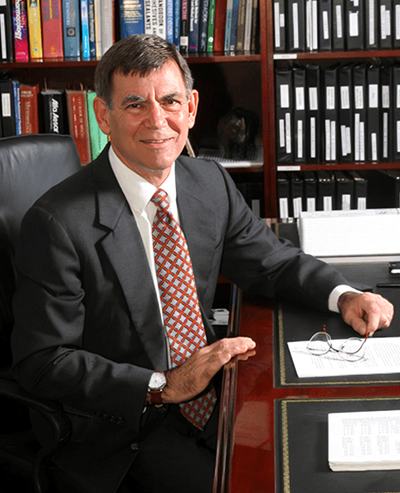
On July 5th, 2026, the peptide and drug-discovery communities lost one of their greatest pioneers.
Dr. Richard A. Houghten was a visionary scientist whose innovations transformed peptide chemistry, combinatorial chemistry, and modern drug discovery. He was not only an extraordinary researcher but also one of the true architects of the technologies that made it possible to synthesize and screen enormous numbers of compounds efficiently.
Among his most influential contributions was the development of the “tea-bag” method for parallel solid-phase synthesis. This remarkably simple and ingenious approach increased peptide-synthesis capacity from hundreds to thousands of compounds and opened new possibilities for both academic research and pharmaceutical discovery. He subsequently pioneered mixture-based combinatorial libraries and positional scanning deconvolution, technologies that enabled scientists to identify highly active individual compounds from libraries containing millions of molecules.
Richard’s scientific creativity continued with the development of the “libraries from libraries” strategy, now recognized as an important form of diversity-oriented synthesis, as well as innovative volatilizable solid supports for high-throughput organic synthesis. Together, these advances fundamentally changed how chemical diversity could be generated, organized, screened, and translated into biologically active compounds.
His impact extended far beyond the laboratory. He founded Multiple Peptide Systems, Torrey Pines Institute for Molecular Studies, Trega Biosciences, and several other scientific organizations and companies. Through these efforts, his discoveries were translated into practical technologies, clinical candidates, and diagnostic applications. As a former President of the American Peptide Society, he also helped shape the future of peptide science and fostered a strong spirit of collaboration throughout our community.
His extraordinary contributions were recognized with many of the highest honors in peptide science, including the Merrifield Award, the Goodman Award, and numerous other national and international distinctions. Yet, among his many recognitions, one that reflected his character particularly well was the Athena Pinnacle Award for his commitment to advancing women in the workplace.
Beyond his remarkable scientific accomplishments, Richard was a generous mentor, an inspiring colleague, and a true friend to so many. He had an exceptional ability to encourage young scientists, share ideas freely, simplify complex scientific problems, and make everyone around him feel valued. His passion for science was matched by his kindness, humility, leadership, and unforgettable sense of humor.
For me personally, Richard was much more than a pioneering scientist. He was a mentor, a colleague, and a friend whose influence shaped my scientific career and the careers of countless others. I will always be grateful for his confidence, guidance, generosity, and friendship.
His passing leaves an immeasurable void, but his legacy will endure through the scientists he trained, the institutions he built, the discoveries he made possible, and the lives he touched. Thank you, Richard, for your vision, your mentorship, your friendship, and your immeasurable contributions to science.
This article was submitted by Dr. Adel Nefzi, Department of Cellular and Molecular Medicine, Herbert Wertheim College of Medicine, Florida International University, Center for Translational Science.